

Books by PASG Members
Many PASG members are faculty members of universities in the United States and other countries. They have engaged in extensive clinical work and research regarding parental alienation. As a group, they have published hundreds of scholarly papers, book chapters, and books, some of which are listed here. The inclusion of any book on this website does not confer approval of the book or its author by the PASG Board of Directors.

Les Enfants du Divorce: Psychologie de la Separation Parentale
Gérard Poussin, Elizabeth Martin-Lebrun | French, 1997
This work explains the psychological consequences of parental separation on the child and the family mediation and individualized aid to attenuate those consequences. The book includes an updated edition of laws of parental authority and alternating residence. The book also includes a comparison of the results of studies conducted over the last 12 years.

The Good Karma Divorce: Avoid Litigation, Turn Negative Emotions into Positive Actions, and Get On with the Rest of Your Life
Judge Michele Lowrance | English, 2011
The Good Karma Divorce is that rare guidebook that offers a concrete path to transforming painful experience into positive action. Family Judge Michele Lowrance, who experienced her parents’ divorce and two of her own, has developed what Karen Mathis, past president of the American Bar Association, describes as an “inspired and uplifting alternative to the agonizing divorce process.” Over the past four years, Judge Lowrance has seen literally one hundred percent of divorcing couples who applied the practices described in The Good Karma Divorce avoid trial. Firmly entrenched in real-world applicability, The Good Karma Divorce is a must-read not only for people in any phase of a divorce, but for psychologists, psychiatrists, attorneys, judges, and social workers, as well.

Tenemos Que Hablar
José Manuel Aguilar | Spanish, 2008
Divorce shouldn’t only mean truncated expectations, unfinished projects and bitterness; it should also mean new opportunities and renewed hope. Psychologist José Manuel Aguilar offers the essential divorce guide: what to do-and avoid-once the decision is made.

Parental Alienation, DSM-5, and ICD-11
William Bernet | English, 2010
Parental alienation is an important phenomenon that mental health professionals should know about and thoroughly understand, especially those who work with children, adolescents, divorced adults, and adults whose parents divorced when they were children. In this book, the authors define parental alienation as a mental condition in which a child – usually one whose parents are engaged in a high-conflict divorce – allies himself or herself strongly with one parent (the preferred parent) and rejects a relationship with the other parent (the alienated parent) without legitimate justification. This process leads to a tragic outcome when the child and the alienated parent, who previously had a loving and mutually satisfying relationship, lose the nurture and joy of that relationship for many years and perhaps for their lifetimes. The authors of this book believe that parental alienation is not simply a minor aberration in the life of a family, but a serious mental condition. Because of the false belief that the alienated parent is a dangerous or unworthy person, the child loses one of the most important relationships in his or her life. This book includes a comprehensive international bibliography regarding parental alienation with more than 600 citations.

Figli divisi: Storie di Manipolazione Emotiva dei Denitori nei Confronti dei Figli
Amy J. L. Baker | Italian, 2010
This is the Italian version of Dr. Baker’s book, Children Divided: Stories of Emotional Manipulation of Parents Toward Their Children. The consequences of parental alienation syndrome can be long-lasting and detrimental. Baker addresses these adverse effects through a series of interviews with adult victims of PAS. These victims recall their experiences as manipulated children and give retrospective insight to the damages wrought by PAS.

Beyond Divorce Casualties: Reunifying the Alienated Family
Douglas Darnall Ph.D. | English, 2010
The companion to Darnall’s bestselling Divorce Casualties, Beyond Divorce Casualties is a workbook for severely alienated children and their parents. The book describes the how and why of unification therapy, how to prepare for reunification, how to effectively work with attorneys, mediators, parent coordinators and counselors, and even how to say “goodbye” if reunification is not possible. This book also provides many real life examples of alienating behavior, exercises, and specific instructions for how to change your feelings and behavior. Importantly, the book’s underlying assumption is that you have the power to change even if you have no power to change the other parent.

Where Did I Go Wrong? How Did I Miss the Signs? Dealing with Hostile Parenting & Parental Alienation
Joan Kloth-Zanard | English, 2013
Where Did I Go Wrong? How Did I Miss The Signs? is a prevention and intervention resource tool for parents, courts, attorney’s, counselors, agencies and anyone else who needs help with high conflict divorce and relationships. From start to finish, this book talks about divorce, marriage, hostile aggressive parenting during and after a divorce, how to deal with this, and help the children to thrive. From cover to cover, this book is filled with information to help stop the snowball affect of high conflict divorce, hostile aggressive parenting, all of which leads to the psychological abuse of the children by destroying their relationship with one of their parents or another relative. It is the hope that this book can help prevent this abuse from happening and help these families to move forward in a healthy, positive and successful way. All proceeds from this book go to Pas Intervention, a 501(c)(3) non-profit.

The Look of Love
Jill Egizii | English, 2010
Anna, the wife of a prominent local attorney, has decided enough is enough. After nearly twenty years of marriage, she realizes she must get free from her controlling spouse. In the process, she loses the only thing that made escaping worthwhile-her children. Despite their joint custody agreement, her ex uses his wiles, wealth, and legal experience to exile Anna from the family. Her once “normal” relationships with her son and daughter mysteriously sour. The system, the law, and her faith in herself all seem to fail her at the same time. While facing the fight of her life, Anna realizes the true meaning of friendship and love.

Child Custody Evaluations by Social Workers: Understanding the Five Stages of Custody
Ken Lewis | English, 2009
The arrival of Child Custody Evaluations by Social Workers: Understanding the Five Stages of Custody fills what was previously a void in the child welfare literature by defining the parameters of child custody and advocating the use of a stages model to conduct custody evaluations. Because social workers understand the significance of ecological models and holistic practices for child development, the profession has always played a critical role in conceptualizing and implementing effective child custody evaluations. Therefore, it is fitting that this important work, authored by a veteran social worker, is now available for social work practitioners and legal professionals seeking guidance for best practices in conducting mental health evaluations that serve the ultimate goal of protecting and promoting the optimal development of children and families.
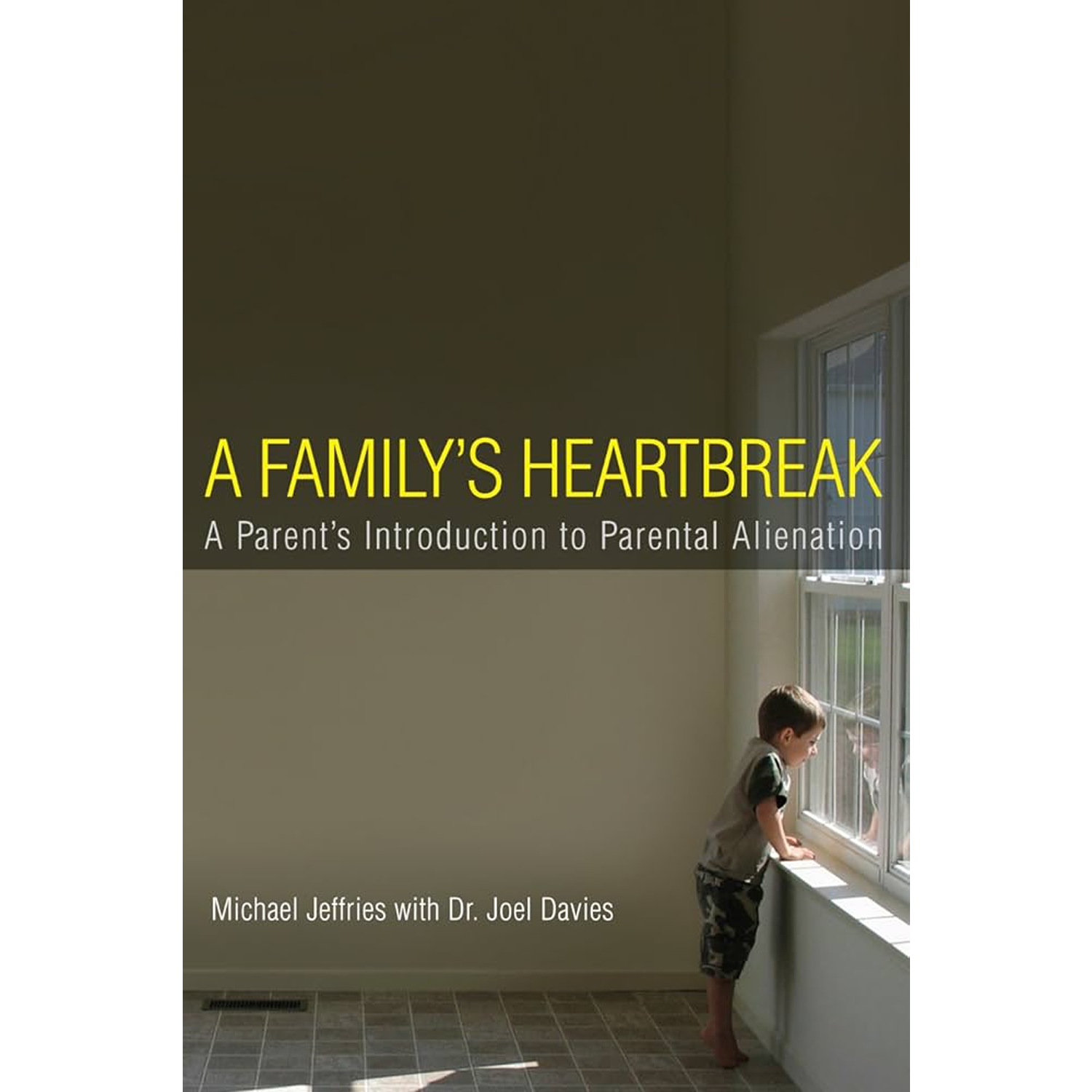
A Family’s Heartbreak: A Parent’s Introduction to Parental Alienation
Michael Jeffries, Dr. Joel Davies | English, 2009
A Family’s Heartbreak: A Parent’s Introduction to Parental Alienation, is the true story of one parent’s struggle to maintain a normal, loving relationship with his young son in the face of overwhelming odds. From the emotionally devastating actions of the child’s other parent, to a court system and mental health community ill-equipped to deal with this destructive family dynamic, A Family’s Heartbreak: A Parent’s Introduction to Parental Alienation, is both an education in parental alienation and an eye opening experience for parents who don’t believe this could happen to them.

Divorce Casualties: Keeping Your Children Close While You’re Breaking Apart
Douglas Darnall Ph.D. | English, 2008
Some parents consciously, blatantly, and even maliciously denigrate their ex-spouse through negative comments and actions. Others simply sigh or tense up at the mention of the targeted parent, causing guilt and anxiety in the children. The result is a child full of hate, fear, and rejection toward an unknowing and often undeserving parent.
Exploring issues such as secrecy, spying, false accusations, threats and discipline, Divorce Casualties recognizes the often subtle causes of alienation, teaching you to prevent or minimize its damaging effects on your children. Dr. Darnall’s practical techniques for understanding the effects of alienation, including characteristics of alienators, symptoms of alienators, a self-report inventory and exercises, and real-life examples, will help even the most well-intentioned of parents renew their commitment to helping their child maintain a healthy, happy relationship with both parents.

Issue Focused Forensic Child Custody Assessment
Eric G. Mart | English, 2007
This is a scholarly analysis of the complex and controversial task of conducting a reasonable child custody evaluation. The author provides an interesting review and analysis of the relevant scientific and legal literature and provides some useful practical suggestions for moving forward. This book will be helpful to practitioners who want to learn more about child custody evaluations.

Children of Divorce: A Practical Guide for Parents, Therapists, Attorneys, and Judges
William Bernet, Don R. Ash | English, 2007
This book speaks to the adults who deal with children of divorce–parents, therapists, attorneys, and judges–and gets them all on the same page. The authors believe that parents and professionals should be able to communicate with a common language regarding the children of divorce. This book contains much specific advice on how to achieve basic goals: children should have a good relationship with both parents; divorced parents should find ways to make life as normal as possible for their children; and divorced parents and their children should accept the inevitable losses and disappointments and move on with their lives. Children of Divorce is organized around the use of parenting plans, agreements that are developed through the collaboration of the parents rather than imposed by a judge.

When Parents Hurt: Compassionate Strategies When You and Your Grown Child Don’t Get Along
Joshua Coleman | English, 2007
In When Parents Hurt, psychologist and parent Joshua Coleman, Ph.D., offers insight, empathy, and perspective to those who have lost the opportunity to be the parent they desperately wanted to be and who are mourning the loss of a harmonious relationship with their child. Through case examples and healing exercises, Dr. Coleman helps parents: reduce anger, guilt, and shame; learn how temperament, the teen years, their own or a partner’s mistakes, and divorce can strain the parent-child bond; come to terms with their own and their child’s imperfections; and develop strategies for rebuilding the relationship or move toward acceptance of what can’t be changed. By helping parents recognize what they can do and let go of what they cannot, Dr. Coleman helps families develop more positive ways of healing themselves and relating to each other.

Parental Alienation: How to Understand and Address Parental Alienation Resulting from Acrimonious Divorce or Separation
L. F. Lowenstein | English, 2007
Parental Alienation is a significant contribution to debates on the effects of family breakdown. Drawing on international research, the book discusses the problems for parents and children when parental alienation occurs. It identifies the signs of parental alienation syndrome (PAS). Concerned with the important task of seeking to remedy PAS, author L.F. Lowenstein’s basic principle is that both parents have the right and the responsibility to guide their children appropriately. The book recognizes children need to be protected from the consequences of being alienated from a parent, and that both parents need to be treated fairly by the system. He also addresses the role of the judiciary, where both the experts and the courts need to help parents resolve their differences to safeguard the welfare of their children. Parental Alienation addresses the important issues of mediation and of treatment, including how to identify and treat accusations of abuse, and it discusses the therapeutic methods required in PAS and the psychological assessment/treatment of pathologically induced alienation.

Hijos Manipulados Tras la Separación – Cómo Detectar y Tratar la Alienación Parental
Doménec Luengo, Arantxa Coca | Spanish, 2007
This book analyzes the episodes of parental alienation and familial conflict and how its effects on each family member – especially the children – progress over time, leading to psychological disorders as the final result for the children. The book also explores the most common causes of alienation and healthy, effective ways for the alienated parent to recover their bond with their children.

Adult Children of Parental Alienation Syndrome: Breaking the Ties That Bind
Amy J. L. Baker | English, 2007
Parental Alienation Syndrome (PAS) occurs when divorcing parents use children as pawns, trying to turn the child against the other parent. This book examines the impact of PAS on adults and offers strategies and hope for dealing with the long-term effects.

The International Handbook of Parental Alienation Syndrome: Conceptual, Clinical And Legal Considerations
Richard A. Gardner, S. Richard Sauber, Demosthenes Lorandos | English, 2006
The dramatic increase in the number of child-custody disputes since the 1970’s has created an equally dramatic need for a standard reference work that examines the growing social problem of children who develop an irrational hatred for a parent as the result of divorce. The International Handbook of Parental Alienation Syndrome features clinical, legal and research perspectives from thirty-two contributors representing views across eight countries, building on the work of the late Dr. Richard Gardner, a pioneer in the theory, practice, diagnosis and treatment of parental alienation syndrome (PAS). This unique title addresses the effects of PAS on parents and children, discusses issues surrounding reconciliation between parent and alicnated child and includes material published for the first time on incidence, gender and false allegations of abuse in PAS.

Handbook for the Study of Parental Acceptance and Rejection
Ronald Rohner, Abdul Khaleque | English, 2005
A Handbook containing description of the theoretical basis for study of parental acceptance and rejection, interpersonal relationships, and mental health outcomes related to these relationships. Measures to assess parent-child relations, intimate partner relations, behavioral control, discipline, parenting education, and other issues are included in the Fourth Edition of the Handbook.

Benchbook In The Behavioral Sciences: Psychiatry-Psychology-Social Work
Demosthenes Lorandos, Terence W. Campbell | English, 2005
Thousands of judges, attorneys, and court personnel have to deal with experts in the behavioral sciences every day. Expert testimony from behavioral scientists (psychiatrists, psychologists, and social workers) is the fastest growing area of expertise in American courts. The U.S. Supreme Court decisions in Daubert, Joiner, and Kumho Tire have profoundly altered the rules of evidence regarding expert testimony. Recent research demonstrates that the judges, attorneys, and court personnel required to implement those changes have little understanding of how to do this with the behavioral sciences. The Federal Rules of Evidence have just been amended to reflect the changes wrought by the Daubert, Joiner, Kumho Tire trilogy. And yet there are no guidelines, practice books, or judicial decision-making manuals that even remotely speak to “gatekeeping” responsibilities with the behavioral sciences. Lorandos and Campbell provide immediate access to authoritative information and immediate decision-making tools for judges, attorneys, and court personnel. It is also a comprehensive text with immediate utility as a decision-making tool. Extensively researched in law and the sciences, Benchbook in Behavioral Sciences provides up-to-date legal and scientific data to aid judges, attorneys, and court personnel in their daily decision-making with expert reports and testimony.