

Books by PASG Members
Many PASG members are faculty members of universities in the United States and other countries. They have engaged in extensive clinical work and research regarding parental alienation. As a group, they have published hundreds of scholarly papers, book chapters, and books, some of which are listed here. The inclusion of any book on this website does not confer approval of the book or its author by the PASG Board of Directors.
Healing Qualia: A Clinical Treatment Protocol for Adult Survivors of Child Psychological Abuse in the Context of Parental Alienation, Familial Abduction and Estrangement
Alyse Price-Tobler | English, 2026
Many adult survivors reach therapy carrying a childhood story they have never been able to fully name. Their histories may include child psychological abuse in the context of parental alienation, familial abduction, estrangement, coercive control, concealment, forced relocation, relational severance, or serious family-system harm. For some survivors, the injury was not only the loss of a relationship, but the loss of safety, reality, identity, belonging, voice, and the right to love and be loved freely.
The Healing Qualia Treatment Protocol (HQTP) is a specialist, phase-based clinical treatment protocol developed for adult survivors of these complex relational and developmental harms. It offers a structured, trauma-informed, non-forensic framework for clinicians working with adults whose attachment, identity, relational safety, grief, memory, and trust in their own perceptions were shaped within coercive or high-conflict family systems.
The HQTP responds to a frequently overlooked and clinically under-addressed form of developmental psychological harm that may remain hidden beneath ordinary language about separation, divorce, family conflict, estrangement, loyalty, alignment, rejection, or contact refusal. Survivors may present with anxiety, depression, trauma symptoms, affect dysregulation, relational difficulties, identity disturbance, grief, or impaired self-trust; however, these presentations may be misdiagnosed or incompletely formulated when the underlying developmental, attachment, and family-system context is not recognised.
Organised around safety, stabilisation, meaning reconstruction, grief integration, trauma integration readiness, differentiation, boundary formation, contact decisions, and long-term adaptation, the HQTP aims to reduce retraumatisation, strengthen clinical formulation, and support recovery marked by greater self-coherence, emotional regulation, survivor autonomy, relational discernment, and reality-based living.
The protocol is informed by Dr Alyse Price-Tobler's doctoral twin study research with adult survivors and mental health practitioners, together with frontline clinical practice and supervision in complex trauma, family-system harm, and high-risk relational presentations.
The HQTP is written for clinical psychotherapists, psychologists, counsellors, social workers, psychiatrists, family therapists, trauma clinicians, mental health practitioners, researchers, advocates, and allied professionals seeking a structured clinical pathway for adult survivors of often-overlooked family-system harm.
THE PSYCHOLOGY OF ALIENATED CHILDREN: When Children Reject Parents
Richard Warshak | English, 2026
This compilation of selected writings by respected scholar and author Richard Warshak will prove to be helpful to professionals and parents dealing with the issue of parental alienation. Written in a clear, accessible style with minimal professional jargon, the fifteen chapters in this volume represent a cross-section of his seminal contributions to understanding, evaluating, preventing, and intervening in cases of parental alienation. The chapters are arranged in chronological order, offering readers a window into the evolution of Warshak’s thinking over time. A new introduction and commentary precede each chapter. In some, behind-the-scenes stories are recounted. In others, he reflects on the paper’s key contributions, its reception, or its influence on how judges, lawyers, and therapists approach the issue of parental alienation. The volume concludes with an Epilogue that distills five decades of study into insights and suggestions for the road ahead—clarifying terminology, deepening understanding of alienation, and pointing to new ways to help children and families heal. The volume will serve as a helpful resource for professionals and parents alike, especially those working to protect children from becoming the unintended casualties of their parents’ conflicts.
PARENTS’ PAWNS: Expert Advice in Navigating False Allegations and Parental Alienation
Alan Blotcky and Dean Tong | English, 2025
False allegations and parental alienation (PA) are misunderstood and mistreated in families who are grappling with divorce and child custody matters. During these stressful times, alienating parents aim to turn their children against the targeted parents for non-legitimate reasons to gain leverage in their court proceedings. These parents use their children as pawns to achieve their vindictive and selfish goals, contrary to what is in the children’s best interests. Navigating these questionable situations is the focus of this book, Parents’ Pawns. Each chapter addresses a specific topic, and case vignettes illustrate central points and themes. Parents’ Pawns is intended as a guide for parents and mental health and legal practitioners seeking to understand and overcome PA and its pernicious false allegations.
Therapeutic Interventions for Parent-child Contact Issues: A Clinician's Guide
Kelley Baker | English, 2025
This book is for clinicians – therapists, counselors, clinical social workers, and psychologists, who work directly with clients going through separation and divorce. It will help to prepare practitioners for the unique demands of working with families in custody litigation. Chapters are presented in a consistent format similar to training seminars and manuals. They begin with learning objectives and, when appropriate, end with a summary of suggested resources labeled as “Clinician’s Toolbox.” The resources include forms, supplies, media, and other practical reminders a therapist might consider adding to their repertoire of techniques when working with this population. Case vignettes provide real-life examples taken from the authors’ professional experience. The book begins with a brief historical look at divorce and custodial issues. The following two chapters discuss the causes for high-conflict dynamics and assessment procedures appropriate for private practitioners. Chapter 3 discusses assessment procedures appropriate for clinicians providing therapeutic services. Chapter 4 focuses on cases involving abuse allegations. Chapter 5 discusses the terminology and diagnostic codes clinicians should use when working with children affected by loyalty binds and unhealthy parental alignments. Chapters 6 through 10 are treatment chapters and provide clinicians with treatment goals and common techniques used to reach those goals. Chapter 11 describes specialized interventions used for severe cases of parental alienation. The book closes with a chapter on how mental health professionals working with this population can protect themselves from aggressive lawyers, mentally ill clients, and licensing complaints.
THE PAUSE: Why You Keep Going Back - And How to Break the Pattern
Mahavir Rajpurohit | English, 2026
You know you shouldn't text. You're going to anyway.
At 2 AM, the phone is in your hand. Their name is right there. And somewhere between knowing better and doing it anyway — there is a gap. This book lives in that gap.
The Pause is not a mindset book. It is a nervous system book. It won't tell you to just move on or choose yourself. It will show you exactly why your body keeps returning to what hurts — and give you a system to interrupt that pattern in real time, under real pressure, when it actually matters.
Understand the Gap Model — the biological reason you go back even when you know better
Use the Pause Protocol — a four-step system that works in sixty seconds
Map your Body Signal System — ground, flow, fire — so you know what you're feeling before you act
Break the Love-Pain Loop — the pattern that makes pain feel like love
Follow Rohan's arc — a complete character story woven through every chapter to show the system in real life
Built for the person who has read all the books, understood everything, and still gone back. This is for the regulation — not just the recognition.
Built for 2.00 AM readers.
The Architecture of Abuse: Mapping the Invisible Structures of Domestic Violence
Che A. Abongwa | English, 2026
He was told to “man up.” The court gave her custody. Society called him the abuser.
This is The Architecture of Abuse—and this book is the blueprint for its demolition.
Most people think domestic violence is a gender issue. It is not. It is a power and control issue.
The Architecture of Abuse shatters the single-story narrative to reveal the hidden system that traps millions of male victims. Drawing on twenty years of research, legal analysis from New Zealand’s landmark 2018 reforms, and case studies including Andrew Bagby and Johnny Depp, this book exposes the interlocking “bars of the cage”:
Coercive Control
Reproductive Coercion
Parental Alienation (PA)
False Allegations (DARVO)
Systemic Bias and the Tender Years Doctrine
Inside this book, you will learn:
Why the Power and Control Wheel applies to all genders—and how perpetrators exploit societal blind spots
The link between Cluster B personality pathology and the “Snake” model of predatory abuse
How Denmark and New Zealand criminalized coercive control—and why the US and UK are falling behind
The Five-Factor Model to prove parental alienation in court and reclaim your children
Real-world cases and overlooked truths that challenge mainstream narratives
This is not a “men’s rights” book. It is a human rights manual.
Whether you are a survivor fighting for custody, a therapist missing the signs, or a lawyer frustrated by gendered precedents, Che A. Abongwa provides the tools to dismantle the cage.
Read it. See the bars. Break them.
Managing Childhood: Therapy, Family Court, and the Illusion of Care
Nicole Anderson | English, 2026
Family court cases are often described as unique.
Each decision is said to turn on its own facts, personalities, and circumstances.
This book asks a different question.
What happens when the same outcomes appear across cases that share no actors, no jurisdictions, and no explicit coordination?
Rather than focusing on individual wrongdoing, this book examines the structure of court-involved family systems, how therapy, professional language, concern, time, and interpretation interact to produce predictable results without ever requiring malicious intent.
Across its chapters, the book traces how:
Allegation quietly gives way to “concern”
Therapy shifts from care to narrative reinforcement
Evidence loses function once coherence is established
Compliance is mistaken for agreement
Stability replaces safety as the measure of success
Children are asked, without being told, to carry meaning adults cannot resolve
These patterns do not require conspiracy.
They require only systems that privilege certainty, continuity, and risk avoidance over contradiction and repair.
The result is a process that feels humane on the surface while becoming increasingly difficult to question from within.
This book does not argue that professionals are acting in bad faith.
It examines how ordinary professional behavior, repeated under legal authority, can generate extraordinary harm without anyone ever stepping outside their role.
Written with restraint and precision, the book avoids instruction, advocacy, and accusation. It does not offer solutions, strategies, or legal advice. Instead, it provides orientation, a way to understand why participation did not bring clarity, why evidence did not reopen the case, and why silence often felt safer than inquiry.
Was I Manipulated to Reject a Safe Parent?: How Choice, Memory, and Loyalty Are Shaped When Children Adapt to Adult Narratives
Nicole Anderson | English, 2026
Most adults who are estranged from a parent believe they chose that distance.
They believe it was clarity.
They believe it was autonomy.
They believe it was necessary.
This book asks whether that belief itself was shaped.
Rather than focusing on dramatic abuse or overt coercion, Nicole Anderson examines the quieter, more powerful mechanisms that lead children to reject safe parents: narrative control, emotional burden disguised as empowerment, professional gatekeeping, and systems that reward delay, silence, and alignment over truth.
Drawing on lived experience and years of close observation of family court and therapeutic systems, this book exposes how separation becomes permanent without ever being openly decided, how loyalty is conditioned long before choice is possible, how memory is reorganized through repetition and omission, and how authority figures often validate outcomes without examining how they were produced.
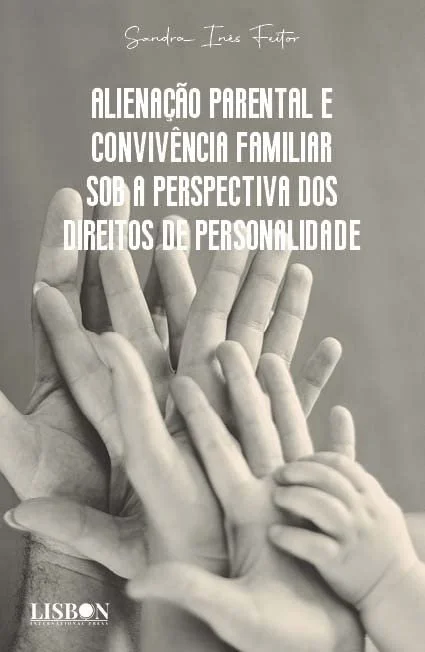
Alienação Parental e Convivência Familiar sob a perspectiva dos Direitos de Personalidade
Sandra Inês Feitor | Portugese, 2023
Parental alienation is a highly controversial topic that does not command consensus within the legal and scientific communities. However, regardless of the characterization attributed to it, parental behavior involving negative interference in the maintenance or establishment of bonds—driven by a pursuit of exclusivity in coexistence and affection—is an undeniable reality in many families and, consequently, in the courts, with all the harm this represents to the harmonious development of children and to the protection of their rights and dignity.
Accordingly, this book represents a doctoral research project in Law, always adopting a multidisciplinary and critical approach and reflection on parental alienation and the necessary distinction between related concepts with which it intersects but should not be confused. It also reflects an urgent need to foster critical reflection on judicial practice, with the aim of promoting deeper engagement with the topic and paradigm shifts in how judicial actors address cases of parental alienation, its correct identification, and the multiplicity of possible solutions.
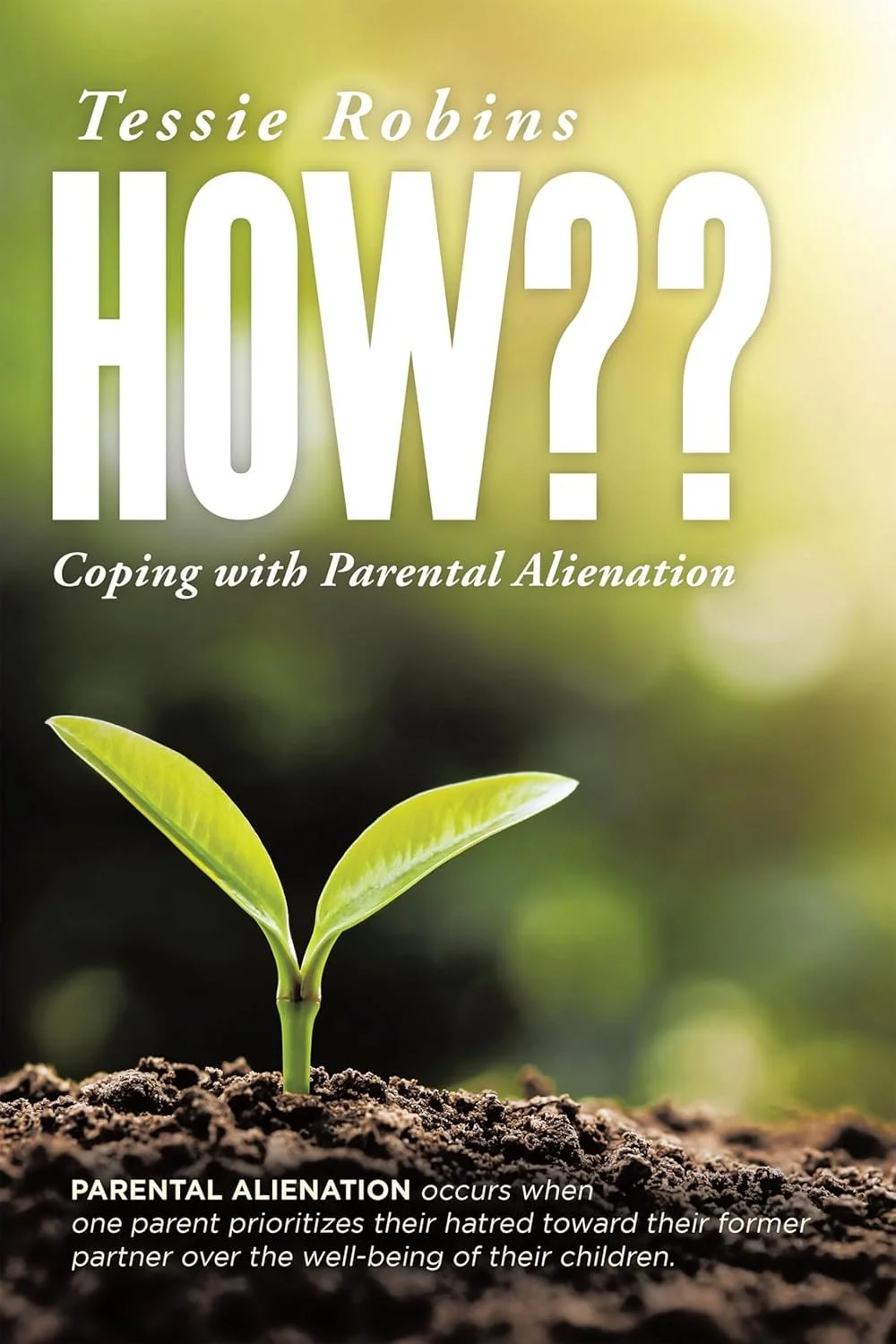
HOW??: Coping with Parental Alienation
Tessie Robins | English, 2025
Parental alienation results from one parent deliberately driving a wedge between their child and the other parent. Losing a child to parental alienation can be incredibly challenging and traumatic. While the parent grieves the unbearable loss, closure never comes because their child is still alive.
In a self-care guide, Tessie Robins shares valuable insights into her experiences, challenges, pain, and ultimate healing journey as an alienated parent with the intent of helping other alienated parents navigate their way through this unique, highly emotional struggle. While offering personal coping tools, strategies for dealing with the emotional turmoil, and methods for identifying triggers and managing stressful situations, Robins also reveals how she embarked on a personal growth journey to emerge from the darkest of days to become the best version of herself as a person and a parent, all while holding hope for an eventual reunion with her son.
HOW?? shares personal stories and practical coping tools to support parents experiencing alienation and encourage self-care to find a path to truly living again.
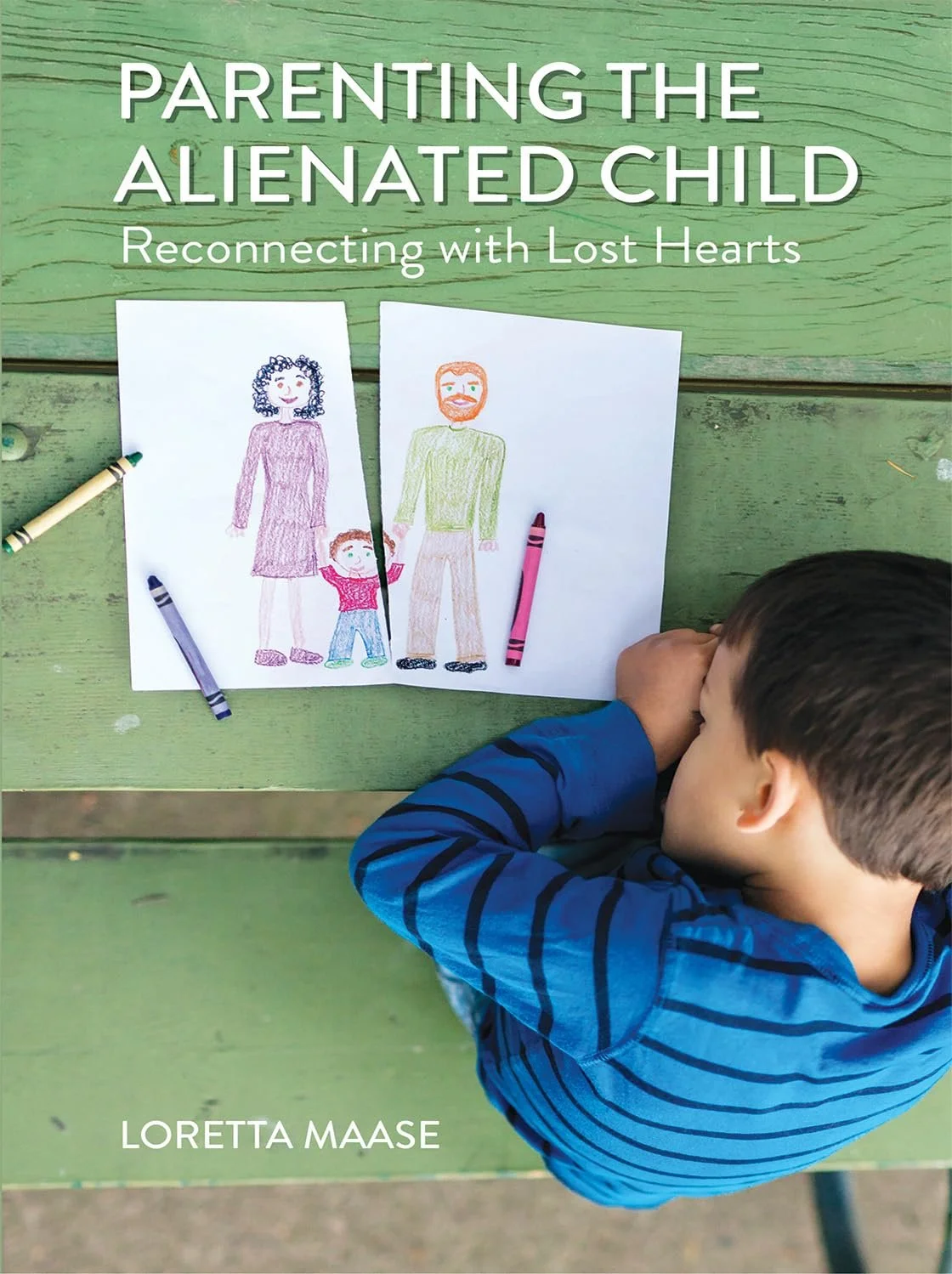
Parenting the Alienated Child: Connecting with Lost Hearts
Loretta Maase | English, 2025
Parenting the Alienated Child was written to provide alienated parents with practical, evidence-based guidance specifically designed to help them understand and respond effectively to their children’s complex needs and bewildering behaviors. It fills this critical void by offering alienated parents the tools and understanding they need to navigate these challenging circumstances while prioritizing their children's well-being. It serves as an essential resource, a must-read for alienated parents seeking effective strategies, mental health professionals working with these challenging cases, and legal professionals who are tasked with helping these families navigate one of the most difficult experiences a parent and child can face. Practical interventions are provided that are grounded in developmental psychology, family systems therapy, attachment theory, and trauma-informed treatment principles. Specifically recognizing the unmatched influence that parents have over their children, Ms. Maase’s treatise provides the wisdom and encouragement needed by alienated parents for them to manage and inspire their children to better cope with their insufferable situation. With real-life examples from her practice, Ms. Maase keeps the reader engrossed in the book, motivating them to consider the most effective parenting strategies to address the many double-binds and crises that arise in alienation, and—most crucially—to understand the heart-wrenching pain that regularly confronts alienated children and their parents. For professionals working with high-conflict families and parents seeking evidence-based guidance, this book serves as both a theoretical foundation and a practical roadmap for healing damaged parent-child relationships while prioritizing the child's psychological well-being.